
Client first or everyone at once? Choose a signing order
Use sequential signing for a required client-first countersignature, or parallel signing when recipients can act independently. Includes a pre-send checklist.

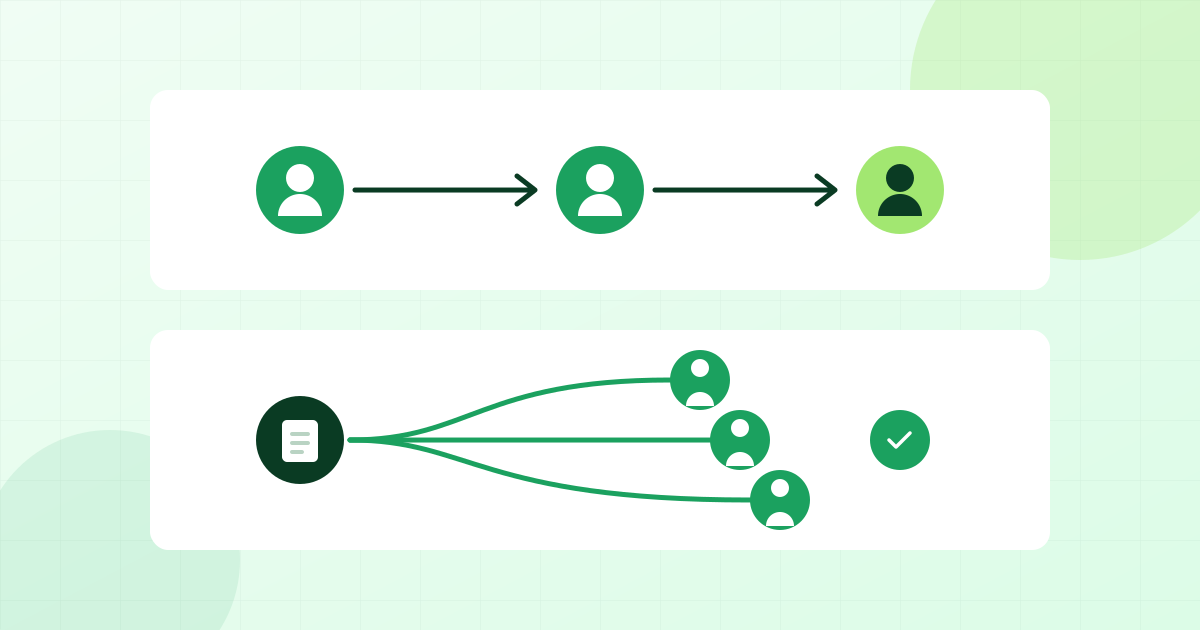
Choose signing order by asking one question: does somebody need another person's signature to happen first?
If your process requires the client to sign before your representative countersigns, use sequential signing. If the required signers can act independently, parallel signing lets them receive the request together. Neither choice fixes an incorrect document or an unclear approval process.
This guide concerns request routing. It does not determine legal validity, witnessing requirements or the authority of a signer.
Example: client first, agency second
A fictional agency has an approved statement of work. Its process calls for the client representative to sign before the agency director. The sender puts the client first and the director second.
Before sending, confirm that the director is the actual countersigner. An internal project review may have been necessary, but that does not automatically make the project manager a party who should sign the final document.
Sequential routing makes a dependency explicit. It also means a delay at the first step holds up the next. If the request appears stuck, check which person is currently expected to act before contacting everyone.
Example: independent signers
Two authorized representatives have already agreed on a document and neither requires the other to act first. Your process permits either order. Parallel routing sends the request to both rather than waiting for the first person to finish.
This removes an unnecessary routing dependency. It is not a promise that the document will finish faster: one recipient may still be unavailable or have an unresolved question.
Do not choose parallel signing merely to bypass a required order. Ask the process owner when the requirement is unclear.
A decision table for the sender
| Situation | Preparation decision |
|---|---|
| A client signature must precede a countersignature | Put the confirmed client signer first; use sequential routing |
| All required signers may act independently | Consider parallel routing |
| Someone needs to review the terms but should not sign | Finish that review before the signature request |
| Signer identity or authority is uncertain | Resolve it before choosing routing |
| A document has changed since the request was prepared | Review the new revision and retire the old request through your process |
The table is a workflow aid, not permission to change an agreement's signing requirements.
Check the fields, not just the recipient list
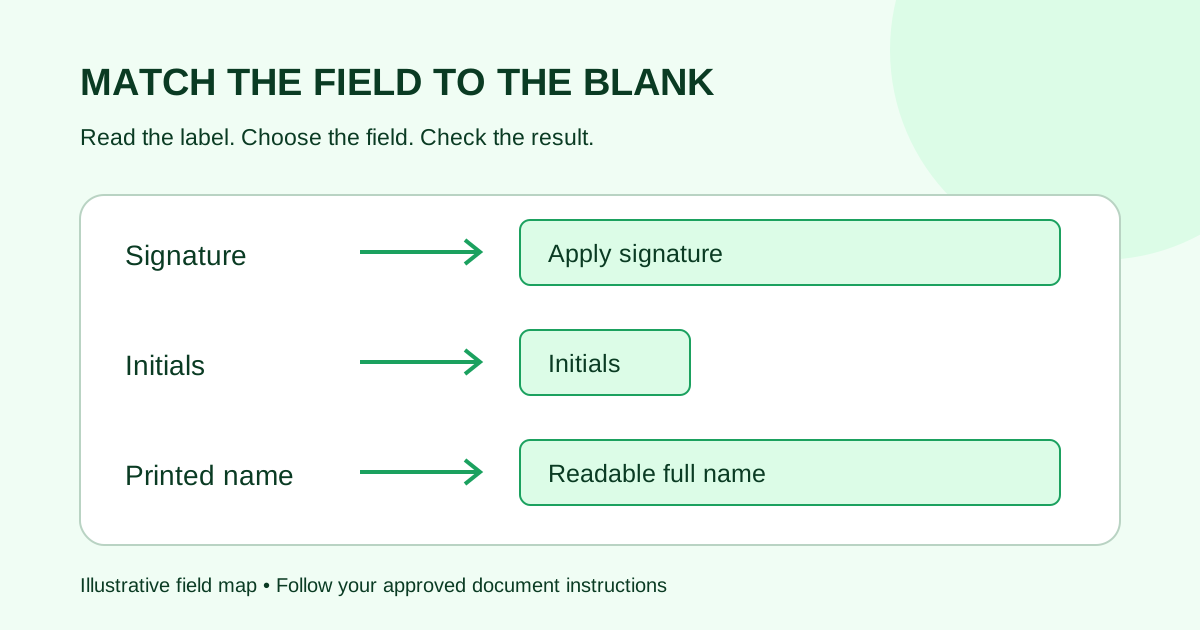
For each signature block, read the name, role and email together. Then verify the field assignment. With two people named Alex, position and color are not enough to distinguish them.
For a concrete two-signer example, use the recipient field map and assignment checklist. Match each signature, name and date field to the confirmed recipient before checking the route.
Review date and text fields as well. A correctly ordered invitation still creates friction if the first signer is asked to fill the second person's details. Open the final PDF to check that fields do not obscure terms or spill beyond the signature block.
Follow up with the person who can act now
Before sending a reminder, check the request status and current recipient. In a client-first route, the countersigner may be waiting for the client; asking the countersigner to act will not resolve that dependency. In a parallel route, check which individual signature is outstanding rather than reminding everyone.
Use the signature reminder examples to describe the document and next step. If the recipient has a question about the terms, route it to the document owner before asking them to sign again.
Test the route on a harmless example
Demand Signatures supports sequential and parallel signing. Before adopting a new team process, use a synthetic document with internal recipients. Confirm who receives a request first, what the next person receives after completion, and where the completed copy is kept.
Keep the result as your team's operating note. Revisit it when the process or product changes rather than relying on memory.
Next step: review sequential and parallel signing in Demand Signatures, then choose the order for your next approved document.
Comments
Questions and notes from readers. Every comment is reviewed before it appears.
Comments are unavailable right now. Please try again later.
Leave a comment